Rain at the Falls: Why a Wet Forecast Should Not Cancel Your Day
A Big Island falls guide on why rain feeds ʻAkaka Falls, what actually changes after a storm, and the rare wet days worth genuinely skipping.
 By Kekoa Kalani, Akaka Falls tour guide and island nature specialist
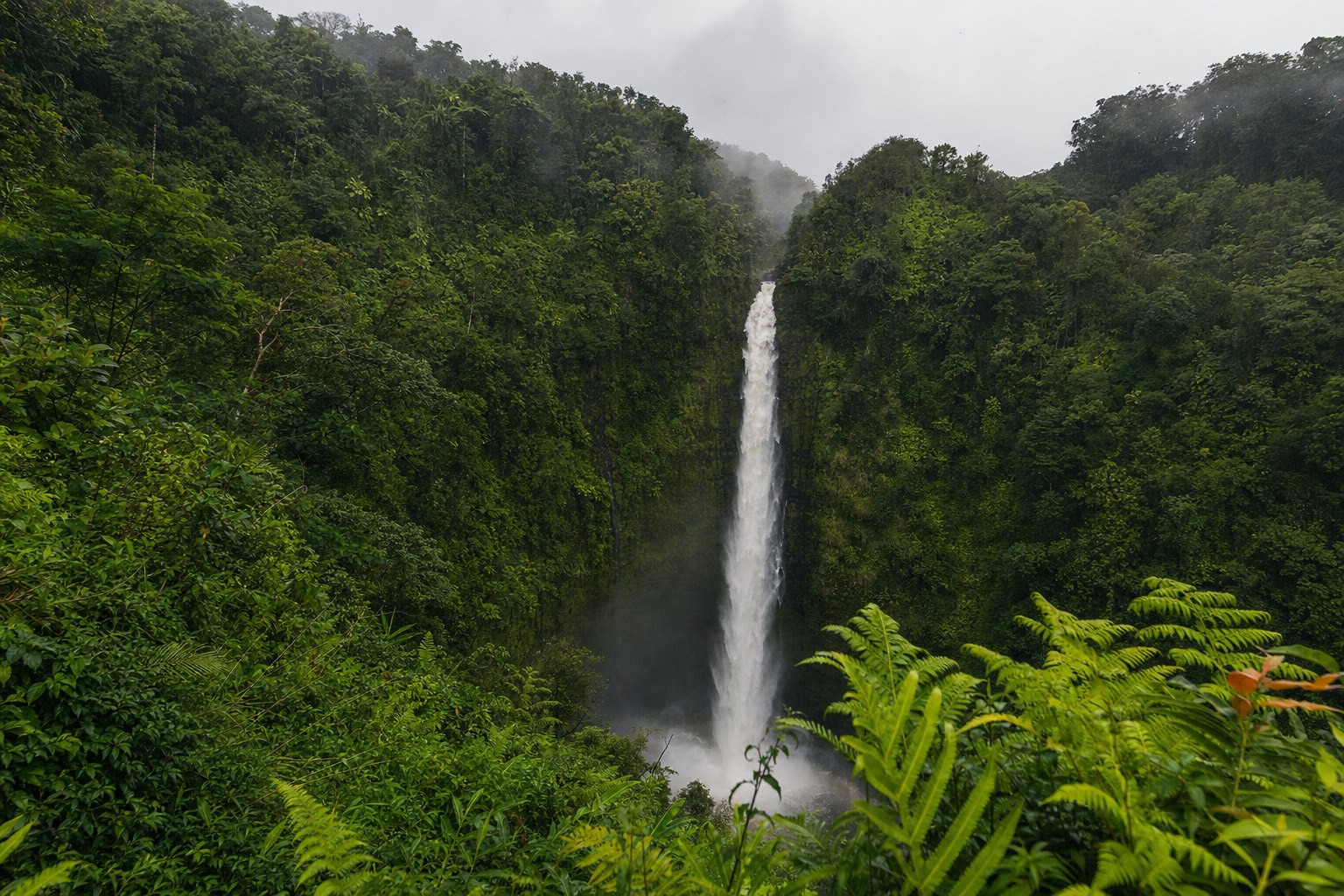
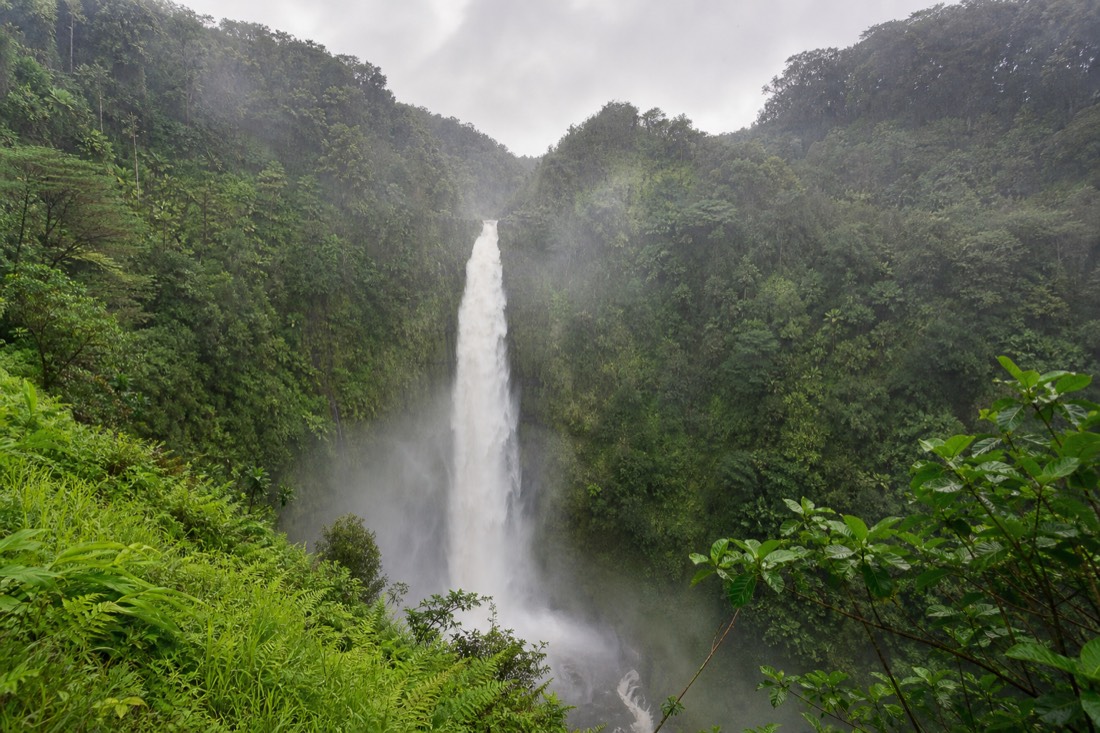
The best day I have ever had at ʻAkaka Falls started with a guest asking me, in the hotel lobby, whether we should cancel. Rain had come through overnight and was still ticking on the roof. We went anyway. An hour later we stood at the overlook watching a 442-foot column of water that had gone from a ribbon to a rope, mist climbing back up the gorge toward us, and she turned around and apologized for asking.
I have been guiding people to this waterfall since 2015, professionally since 2018, and the single most common mistake I see is not a packing error or a parking mixup. It is people reading a Hilo-side forecast the way they would read one for Waikiki, and quietly dropping the falls from their plan.
Rain is the reason this waterfall exists
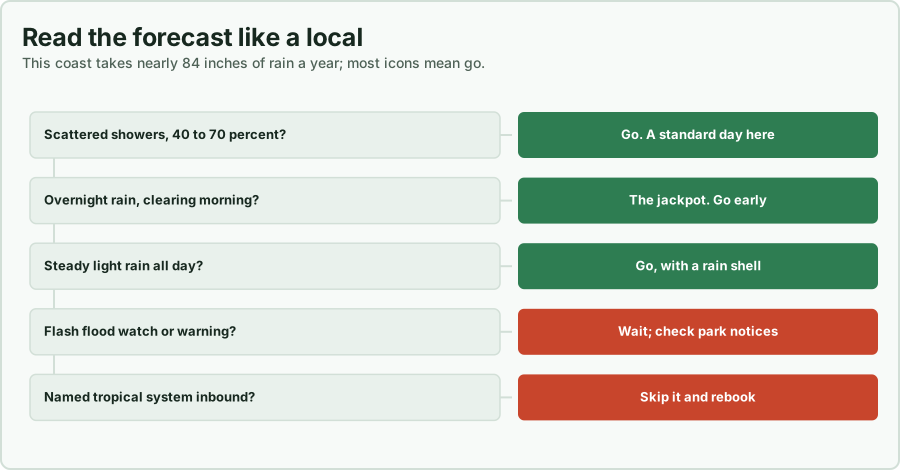
The Hamakua Coast is the windward side of the Big Island. The trade winds push wet Pacific air into the slopes of Mauna Kea, the air rises, and it rains. The region pulls in nearly 84 inches of rain a year, which is why everything here is the deep, saturated green that ends up on postcards. Kolekole Stream, the stream that becomes ʻAkaka Falls, is fed by that rain. No rain, no waterfall. It really is that direct.
So a forecast with rain icons on it is not a warning about the falls. Most of the time it is a promise. What matters is what kind of rain, and that is a distinction weather apps flatten completely.
| What the forecast shows | What it usually means here | My call |
|---|---|---|
| Scattered showers, 40 to 70 percent | Normal Hamakua weather, passing cells with bright gaps | Go. This is a standard day |
| Overnight rain, clearing morning | The jackpot: full falls, fresh air, thinner crowds | Go early and bring the camera |
| Steady light rain all day | Wet but entirely walkable, the loop is paved | Go with a rain shell and a towel in the car |
| Flash flood watch or warning | Streams can rise fast, county may advise against gulches | Wait it out, check park notices before driving up |
| Named tropical system inbound | State parks can close, operators cancel proactively | Skip it and rebook, no heroics |
That percentage number trips people up the most. On this coast, 60 percent chance of rain usually means an hour of showers moving through, not a ruined day. I have guided mornings with that exact forecast where we never opened an umbrella. The rain here is also local in a way mainland visitors find hard to believe: it can be pouring in Hilo and dry in Honomū, or the reverse, over a distance you could cycle. Reading one town's radar and cancelling the other town's plan is how people talk themselves out of the best hour of their trip.
What the falls actually look like at each flow level
People ask me if rain "ruins the view." The honest answer is the opposite, up to a point. Here is the qualitative range I have watched across ten years of visits, from drought weeks to the day after a big storm.
| Flow level | What you see at the overlook | Worth going? |
|---|---|---|
| Low, after dry spells | A slender white ribbon, elegant, quieter, more birdsong than water noise | Yes, still a 442-foot waterfall |
| Normal | The classic postcard column into the green gorge | Yes, obviously |
| Full, after overnight rain | A heavier rope of water, audible from up the trail, mist drifting over the rail | The best version of this park |
| Storm flow | Brown with sediment, thunderous, cloud sitting in the gorge | Dramatic but murky, and the weather that caused it may close things |
The one caveat in that table matters: peak storm flow often comes with the kind of weather that makes the drive and the trail unpleasant, and the water turns brown with runoff. The sweet spot is the day rain eases, not the middle of the downpour. Aim for the morning after a wet night. I wrote more about seasonal timing in when to visit the falls, and rain-fed flow is also the secret behind the photos in my photography notes.
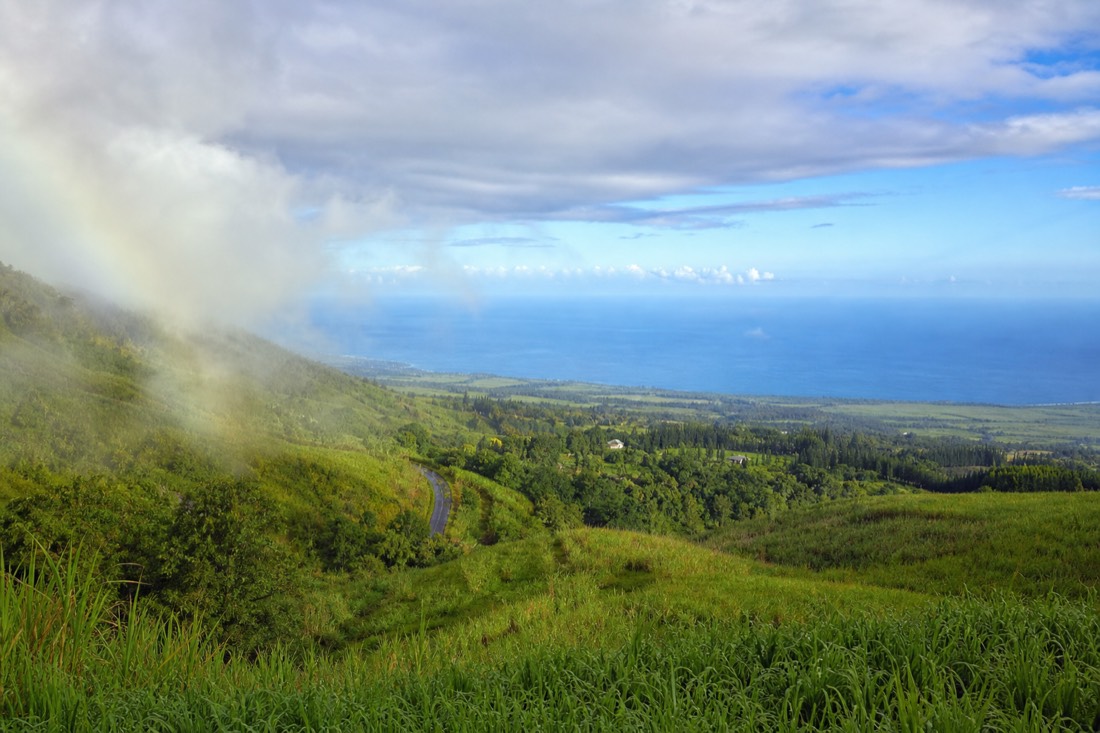
Kona-side visitors face a different version of this problem, because their wet day and the coast's wet day are rarely the same day. If that is you, the circle-island day that crosses to this side and back beats gambling a three-hour drive on a forecast for a town you cannot see.
The trail was built for exactly this weather
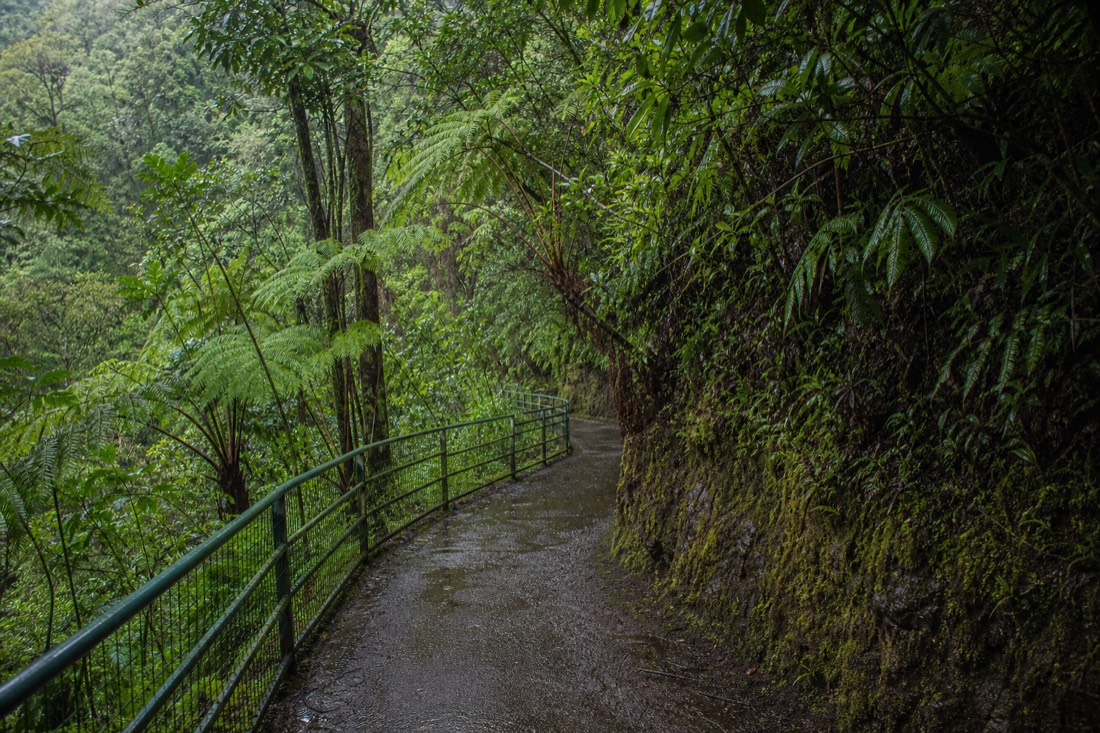
This is the part visitors do not expect. The ʻAkaka Falls loop is a 0.4-mile paved footpath, the whole way. No mud, no stream crossings, no scrambling. There are stair sections and the state fairly describes it as requiring some physical exertion, and wet steps deserve slow feet and the handrail. But compare that to almost any other waterfall trail in Hawaii, where rain means shoe-sucking mud, and you see why I send people here on wet days specifically. The full trail breakdown, including which stretches steepen, sits in my notes on the loop itself.
The park keeps its normal rhythm in rain. Gates run 8:30am to 5:00pm daily, the fee kiosks take cards as always, and the covered interpretive signs give you somewhere to pause while a cell passes. Forty five minutes still covers the full loop at a relaxed pace, showers included, which is roughly the pacing I lay out in how much time you actually need.
And the tours run. The operators who bring guests here work this coast every week of the year, which means they drive in rain constantly and plan for it. A wet forecast does not cancel a Big Island waterfall day. What cancels one is the rare severe event, and that call belongs to the operator, not to your weather app. If the point of your day is the waterfall at its loudest, the Hilo-side day with a full hour at the overlook is the one that gives the weather room to cooperate, because an hour is long enough for a cell to pass and the light to come back.
Which wet morning do you actually pick?
Say you have three days on the island and every one shows rain. Not unusual here, and it is where guests most often freeze. Stop ranking those days by rain probability and start ranking them by rain timing. The two are not the same thing.
A day forecast as showers ending mid-morning is the best waterfall day of your trip and the worst beach day, so spend it here and put the coast plans elsewhere. A day forecast as building afternoon rain is fine if you reach the gate at opening, which is why I push guests toward early starts. Rain arriving overnight is a gift to the day after, not to itself. The pattern I trust most clears from the ocean inward: when the horizon goes bright, the gorge follows within the hour.
There is one more axis nobody plans for. Rain shrinks the crowd. Tour buses still arrive, but casual drop-in traffic thins out, so the overlook rail on a drizzly Tuesday feels like a different park from the same rail on a dry Saturday. I have taken photographs on wet mornings I could not have taken any other way, purely because I had the rail to myself. The trade is a damp shirt.
If your wet window is short, a shorter product is the honest fit. A half-day waterfall circuit out of Hilo puts you at the falls, gets you back, and does not gamble your one clear afternoon on a long itinerary.
When I would actually tell you to stay home
I promised honesty, so here is the other side. A handful of days each year genuinely deserve a skip. County flash flood warnings mean streams on this coast can rise fast, and I do not take guests near gulches while one is active. Tropical systems with real wind can close state parks outright, and the Division of State Parks posts closures on its notices page, which I check before any questionable morning. If an operator cancels on you for weather, take it as information, not overcaution. They lose money cancelling. They do it because the day would be bad.
The other honest skip is personal rather than safety-driven. If mobility on stairs is already a question, heavy rain adds real difficulty to the descent, and there is no shame in swapping to a drier plan. I walked through that in visiting with kids and seniors: the shortcut path from the first junction removes most of the climbing.
For everything short of that, the machinery works in your favor. Guided days out of Hilo have the easiest weather logic of all, because the drive is short and the schedule has slack built in. On a showery week, the Hilo pickup day is the version I point guests toward: a long stop at the falls with admission handled, and an operator making the weather calls with local eyes.
What I actually carry on wet-side days
Not much, and that is the point. You are on a paved loop for under an hour, not on an expedition. This is the kit I keep in the truck for guests.
| Item | Why it earns its place | What to skip |
|---|---|---|
| Light rain shell with a hood | Showers pass in minutes, a hood beats wrestling an umbrella on stairs | Heavy rain gear, you will cook in it at this elevation |
| Shoes with real tread | Wet paved stairs are the one honest hazard on the loop | Hiking boots, sneakers with grip are plenty |
| Lens cloth or bandana | Mist off the falls fogs every lens and phone at the overlook | Nothing fancy, cotton works |
| Dry layer waiting in the car | Changing out of a damp shirt makes the rest of the day | A full change of clothes, overkill |
| Card for the kiosks | Entry and parking are credit card only, no cash accepted | Cash, genuinely useless at the gate |
One more habit worth stealing: pay the park fees online before you leave Hilo or Honomū, because cell reception at the trailhead is poor and the state itself encourages paying before arrival. Rainy mornings put nobody in the mood to fight a spinning payment screen. Entry is $5 per non-resident and parking is $10 per vehicle, card only, with Hawaii residents free on an ID, and that is the entire gate arithmetic no matter what the sky is doing.
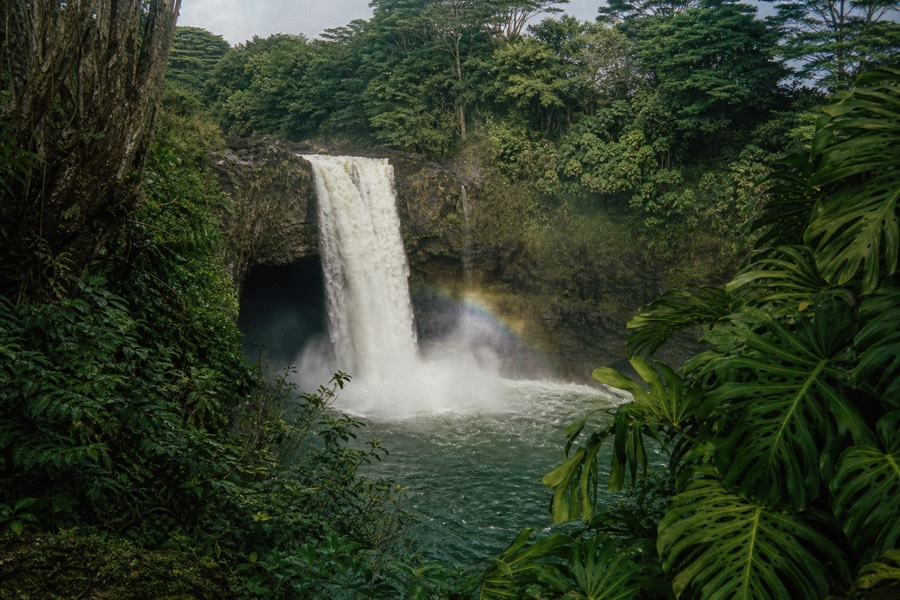
The same operator sells a second Hilo-side version of the day that swings through Rainbow Falls and the Onomea scenic drive, which is the one I suggest when a guest wants more coast and fewer crater miles on a grey morning. Both leave from town, both handle the gate fees, and comparing them takes about a minute on the operator's page for that itinerary.
The Hamakua Coast made its own bargain long ago: it takes the rain and it hands back waterfalls, and you only get to collect on one side of that deal. If your falls day dawns grey, drive up anyway. The drive itself is half the pleasure, something I have gone on about at length in my notes on the coast road, and if the sky opens on the way there are other waterfalls near Hilo close enough to fill the gap. At the end of it there is a very good chance the waterfall will be the biggest you were ever going to see it.
Falls days that run in rain
Akaka Falls, Volcanoes & Hilo day (full hour at the falls)
7 to 8 hours
from $179per person, varies by date Check availability →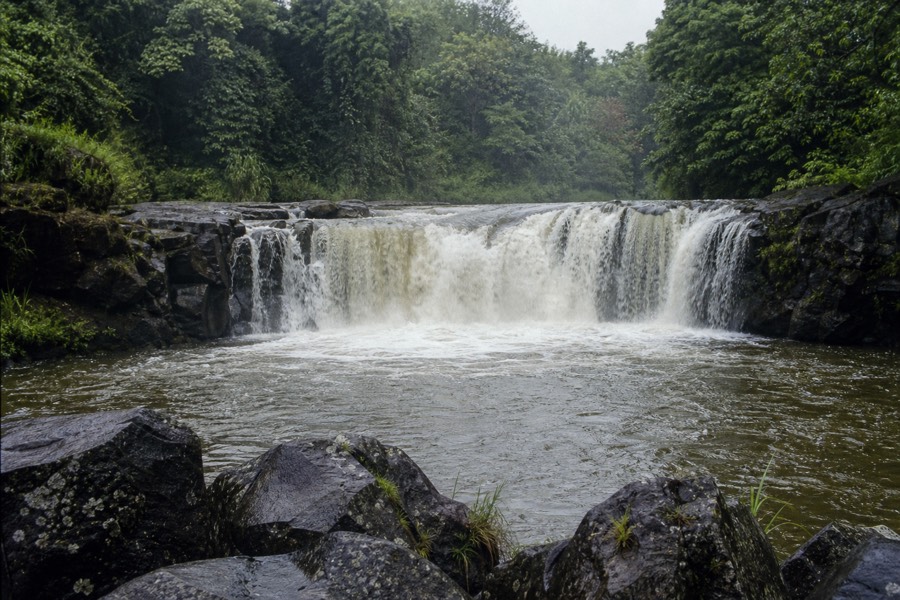
Majestic waterfall half-day from Hilo
Half day
from $229.99per person, varies by date Check availability →
Big Island in a Day circle tour
About 11 hours
from $276per person, varies by date Check availability →